How Emerging Technologies (AI, AR/VR) Are Shaping UX & Digital Products
Business
- Binary Optimizers
- 00:44 am
- 16 Oct 2024
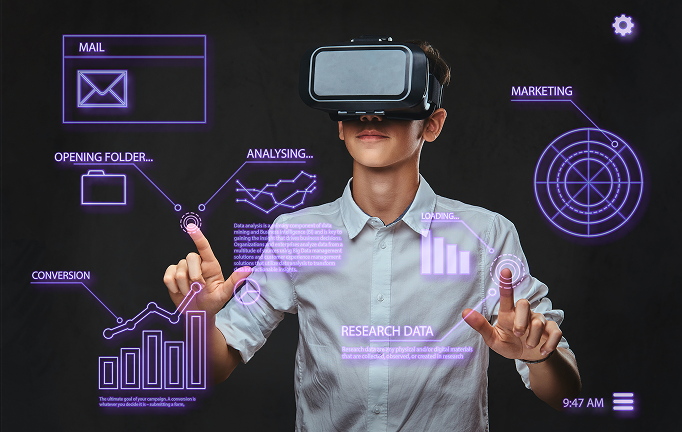
How Emerging Technologies (AI, AR/VR) Are Shaping UX & Digital Products
How Emerging Technologies (AI, AR/VR) Are Shaping UX & Digital Products
Technology never stands still — and neither do user expectations. Over the past few years, emerging technologies like Artificial Intelligence (AI), Augmented Reality (AR), Virtual Reality (VR), and Voice Interfaces have started reshaping how people interact with digital products.
For businesses, this shift is more than a trend. It’s an opportunity to create smarter, more immersive, and more personalized user experiences that set them apart. At Binary Optimizers, we help clients explore these technologies strategically — not just for novelty, but for real impact.
Artificial Intelligence is quickly becoming a behind-the-scenes force in UX:
Generative Design
– AI tools can create layouts, color palettes, or content variations automatically, giving designers a head start.
Personalization at Scale
– Recommendation engines (like Netflix or Spotify) adapt experiences in real time based on behavior.
Smart Assistance
– Chatbots and virtual assistants offer instant support, improving customer satisfaction and reducing response times.
Predictive UX
– AI anticipates user needs — from autocomplete search to predictive text or even suggesting the next best action.
By leveraging AI, businesses can move from static, one-size-fits-all interfaces to adaptive, context-aware products.
AR and VR are moving beyond gaming into everyday digital products:
AR in E-commerce
– Shoppers can preview furniture in their homes, try on glasses virtually, or see how clothing fits before buying.
Virtual Training & Collaboration
– VR creates safe, realistic environments for employee training or remote teamwork.
Product Visualization
– Complex products (like machinery or real estate) can be experienced in 3D before purchase.
Entertainment & Storytelling
– Brands use AR filters or VR experiences to deepen engagement and create memorable campaigns.
These technologies allow brands to bridge the gap between digital and physical worlds, reducing uncertainty in buying decisions and creating stickier experiences.
Voice technology is changing how users interact with devices:
Voice Search & Navigation
– Smart speakers and mobile assistants make it easy to search or control devices without typing.
Accessibility & Inclusivity
– Voice-first interactions improve usability for people with disabilities or those on the move.
Conversational Interfaces
– Instead of navigating menus, users can simply ask for what they need.
This shift requires rethinking UX — designing for conversation flows rather than just visual layouts.
While exciting, these technologies also come with hurdles:
Performance & Speed
– AR/VR apps require high processing power and seamless performance to feel natural.
Privacy & Data Security
– AI personalization depends on user data, raising concerns about transparency and trust.
Lack of Standards
– UX conventions for AR, VR, and voice are still evolving, which can confuse users.
Cost & Complexity
– Implementing these solutions requires investment and specialized expertise.
Addressing these challenges thoughtfully is key to adoption.
Start Small
– Run pilot projects to test feasibility and user response.
Focus on Value
– Don’t use tech for tech’s sake — ensure it solves a real user problem.
Test with Real Users
– Gather feedback early and often to refine the experience.
Roadmap Integration
– Align emerging tech experiments with long-term business goals.
Emerging technologies aren’t just add-ons — they’re shaping the future foundation of digital products. We envision:
AI-powered products that adapt instantly to user context.
Fully immersive VR shopping or collaboration environments.
Seamless integration of AR into everyday mobile browsing.
Voice becoming the primary interface for common tasks.
The future of UX will be intelligent, immersive, and intuitive.
AI, AR/VR, and voice technologies are transforming how we think about user experience. For businesses, adopting these tools early offers a competitive advantage — but success comes from thoughtful integration, not flashy gimmicks.
At Binary Optimizers, we help clients explore and implement emerging technologies in ways that drive real business outcomes while keeping users at the heart of every experience. Because the future of UX isn’t just about technology — it’s about creating digital products that feel natural, personal, and unforgettable.